

From AED 400
Brand care
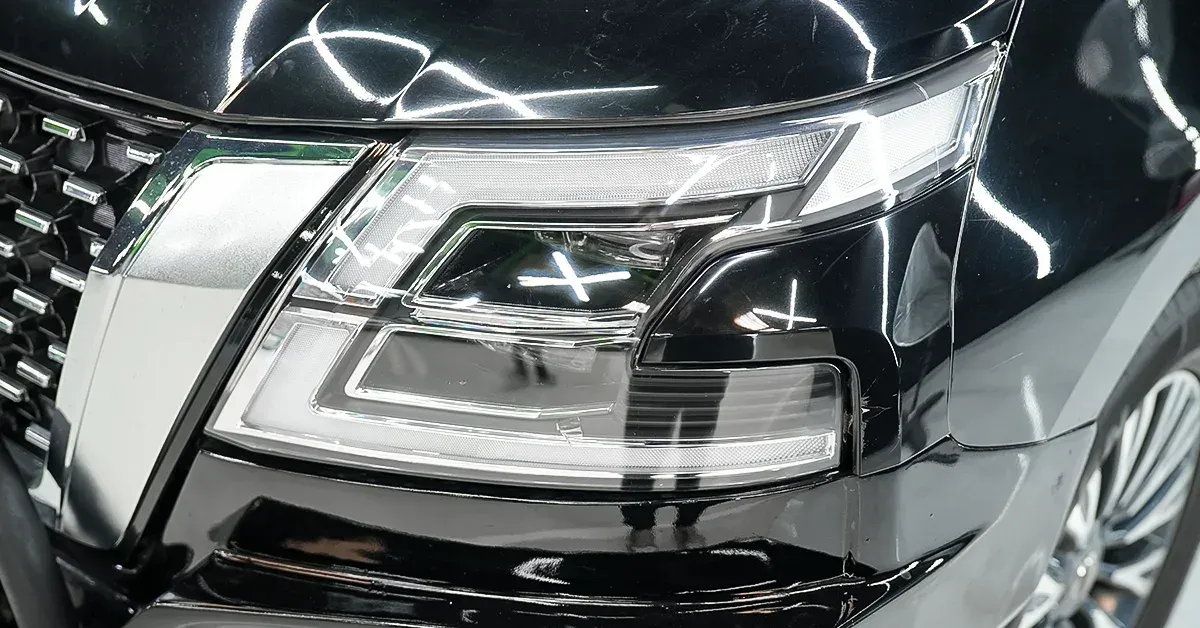
Nissan Patrol detailing clears sand from the arches and sills, guards the paint against dune-side scrapes and refreshes the quilted cabin. We detail every Patrol, from older generations to the NISMO, at our Mussafah centre.

Mon to Sat 09:00 to 22:00, Sun 09:00 to 19:00
Popular services
From AED 400

From AED 1,250 + VAT

From AED 650
Models
See also: Nissan detailing, Toyota detailing
Our work
Why us
Know before you book
Nissan Patrol detailing means cleaning, correcting and protecting a Patrol inside and out, and we do it at our Mussafah centre. The seventh-generation Patrol was unveiled in Abu Dhabi in September 2024, and the NISMO and PRO-4X versions followed in 2025.
Many Patrols spend their weekends in the dunes, so sand, scrapes and dusty cabins are the usual starting point. Every other model in the range is covered on our Nissan detailing page.
Sand packs into the wheel arches, sills and underbody, and fine grit settles in every door shut. The Patrol’s sand mode helps it cross the dunes, but it cannot stop the dust that follows.
Loose sand is rinsed off with low-pressure water before anything touches the paint. A dry cloth on a dusty Patrol pushes grit over the clear coat and leaves fine scratches.
Grit also works into the tailgate rubber, the bonnet edges and the gaps around the fuel flap. Each shut is opened and wiped by hand, because a hose alone leaves a line of sand behind. Beach trips add salt, and salt left in the arches speeds up corrosion.
Each version has its own materials, wheels and trim, so the products change from car to car.
Contrast stitching shows dirt more than plain seams, so it gets a soft brush rather than a quick wipe.
The current Patrol offers Invisible Hood View, which uses cameras to show the ground beneath the front of the car. Nissan’s manual says high-pressure water should not be sprayed around camera covers, because it can get into the unit.
It also says not to use alcohol, thinner or body wax on the clear covers. A cloth dampened with a mild cleaner, followed by a dry cloth, keeps the picture sharp after a sandy trip.
Small sensors and lenses in the bumpers also collect a film of dust after every desert run. A gentle wipe is safer than scraping, because a scratched lens blurs the picture for good.
Large Patrol wheels are cleaned only once they have cooled to the air temperature, because Nissan’s manual rules out wheel cleaner on hot wheels. A summer drive can leave alloys too hot to touch for some time.
The same manual warns against cleaners with strong acid or alkali content, and asks for the product to be rinsed away within 15 minutes. Left longer, a cleaner can stain or discolour the finish.
Sand caught in all-terrain tread falls out onto clean paint later, so the tyres are brushed and rinsed before the body. Kerb marks on 22-inch rims are common in tight car parks, and a scuffed rim can usually be refinished.
Heat and sun hit the darkest surfaces hardest, so a black two-tone roof gets very hot and shows every water spot. A wash at dawn, or in a shaded bay, keeps marks from baking on.
Inside, quilted seats have stitched channels where fine sand and dust settle out of sight. Over time that grit rubs at the leather each time someone gets in. Soft brushes and compressed air lift it out before the surface wears. Leather that dries out can crack along those seams, so a conditioner suited to the hide follows the clean.
Strong sun through the large glass areas also warms the wood trim and leather for hours. Good window tinting and covered parking slow the drying and fading that follow. On humid coastal mornings, dew settles on the dusty paint and leaves cloudy spots as it dries.
Most owners want chip protection, an easier-to-clean finish and a fresh cabin after family trips. These are the common problems and the work that usually answers them.
| Common issue in the UAE | What usually fixes it |
|---|---|
| Sand packed into the arches and sills | A low-pressure rinse, then underbody rust proofing for beach driving |
| Scrapes and chips after dune trips | Clear film over the front bumper, bonnet edge and door bottoms |
| Dull, oxidised paint on an older Patrol | A machine polish to lift the dull top layer |
| Dust that clings to a black roof | A ceramic coating, so it rinses off easily |
| Kerb scuffs on large alloy rims | Rim repair and refinishing |
| Sand in quilted seat stitching | An interior detail with soft brushes and air |
For example, a family that crosses the dunes most weekends often pairs film on the front with a coating on the rest. The film takes the chips, and the coating makes the weekly wash quicker. Owners of earlier Patrols usually start with a polish and headlight work, then decide on protection.
A black roof shows dust and swirl marks quickly, and it is hard to reach on a tall SUV. A coating helps it rinse clean with less rubbing.
Yes. Forged aluminium wheels get a gentle, pH-balanced cleaner and soft brushes, never harsh acid products.
It helps. Clear film on the bumper, bonnet and lower doors takes the grit and stone chips that dune trips bring.
Usually, yes. Machine polishing takes off the dull, oxidised surface, and cloudy headlights can be restored too.
With a soft brush and a cleaner made for microfibre suede. Leather products can flatten the soft surface.
Within a day or two is ideal. Dry sand rinses off easily, but morning dew can bind it into a gritty crust.