How to Erase Scratches on a Car?
No one likes to see scratches on their car. Even a small mark can take away its shine and beauty. The good news is that you can fix many scratches at home using simple tools and easy methods. To remove marks, you can wash, clean, polish, or use touch-up paint, depending on how deep the scratch is.
Some light scratches can be fixed using toothpaste or a scratch remover, while deep ones may need touch-up paint. Let’s go through the best steps to safely erase a scratch on a car and make it look new again.
Understand the Types of Car Scratches
Before starting the repair, it’s essential to determine the type of scratch you are dealing with. Scratches are not all the same; some are light, while others are deep.
- Surface scratches are tiny marks on the clear coat.
- Clear coat scratches go a bit deeper, but not into the paint.
- Deep scratches reach the paint or even the metal.
You can check how deep a scratch is by running your fingernail across it. If it doesn’t catch, it’s a surface scratch. If it catches, it’s deeper and may need more repair.
Step-by-Step Process to Erase Scratches on a Car
Here’s an easy guide to help you fix scratches and bring back your car’s shine.
1. Clean the Area
Start by washing the scratched part with car shampoo and clean water. Use a soft sponge or cloth to remove dirt, dust, and road grime. Cleaning helps you see the scratch clearly and keeps dirt from causing more damage. Dry the area completely using a microfiber towel before you move to the next step.
2. Remove Grease and Wax
Once the surface is clean, use rubbing alcohol or a small amount of cleaner on a soft cloth to wipe off wax, grease, or oil. This helps new products like polish or paint stick better. A clean surface makes the repair smoother and gives a better final finish.
3. Check How Deep the Scratch Is
Now, check the scratch depth to choose the right method. Light scratches only affect the clear coat, while deeper ones might reach the paint or metal. Gently drag your fingernail over the mark. If it doesn’t catch, it’s light. If it catches or feels rough, you’ll need stronger repair steps such as sanding or touch-up paint.
4. Try Toothpaste or Scratch Remover for Light Scratches
For small surface scratches, toothpaste or a car scratch remover can work well. Put a little on a clean cloth and rub it gently over the scratch in small circles for one to two minutes. Wipe it clean with a damp cloth and check the result. Repeat this process a few times until the scratch becomes lighter or disappears. This is an easy and low-cost fix for small marks.
5. Wet Sand for Deeper Clear Coat Scratches
If the scratch is still visible after polishing, it may be deeper in the clear coat. Use fine wet sandpaper (2000–3000 grit). Soak it in water and sand the area gently in small circles. Keep the paper wet the whole time to prevent damage. Stop sanding once the scratch looks faded. This step helps smooth the surface and prepare it for polishing.
6. Polish the Area
Polishing brings back the shine and blends the fixed area with the rest of your car’s paint. Apply a small amount of car polish for scratches on a soft cloth and rub in circular motions. Keep polishing until the surface feels smooth and glossy. Wipe off any leftover polish with a clean, dry cloth. This makes your repair look neat and even.
7. Apply Touch-Up Paint for Deep Scratches
If the scratch reaches the paint or metal, use touch-up paint. Choose paint that matches your car’s color code. Shake the bottle and use a small brush or pen to apply thin layers over the scratch. Let each layer dry before adding the next. Once done, add a clear coat to protect the paint from fading and water. When dry, polish gently to blend it with the surrounding area.
8. Final Buff and Protect
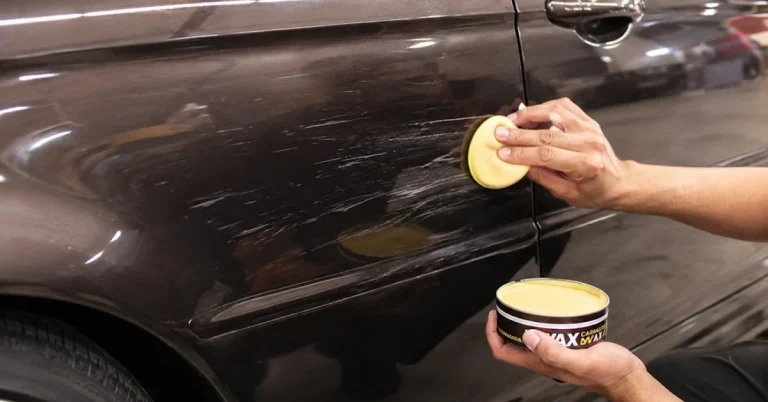
After the paint and clear coat have dried, buff the repaired spot gently with a soft cloth to make it shine. Finally, apply a thin layer of car wax over the area. Wax adds a protective layer that helps prevent future scratches and keeps the paint bright. It also gives your car a clean, glossy look that lasts.
Extra Tips to Prevent Future Scratches
Prevention is always better than repair. Here are some easy ways to keep your car scratch-free:
- Wash your car regularly to remove dirt and dust.
- Park away from bushes, trees, and other cars.
- Use a car cover if you park outside.
- Avoid automatic car washes with hard brushes.
- Apply wax every few months for extra protection.
Following these steps helps keep your car’s paint looking smooth and shiny all year round.
When to Visit a Professional?
If you notice large or deep scratches that reach the metal or see signs of rust, it’s better to visit a professional. Auto detailing experts use advanced tools and paints that match perfectly. They can restore your car’s surface without leaving any sign of damage. While this may cost more, it ensures your paint stays safe and lasts longer.
Conclusion
Scratches on your car can make it look dull, but they don’t have to stay forever. By following simple steps like cleaning, polishing, and using touch-up paint, you can fix most marks at home. Regular care, waxing, and safe parking can also help you avoid new scratches. With the right tools and patience, it’s easy to erase scratches on a car and bring back its original shine.
For expert help or a professional finish, contact Exotic Car Care today and let your car shine like new again.